
TEACHINGS: Psychology & Consciousness
Psychology & Consciousness
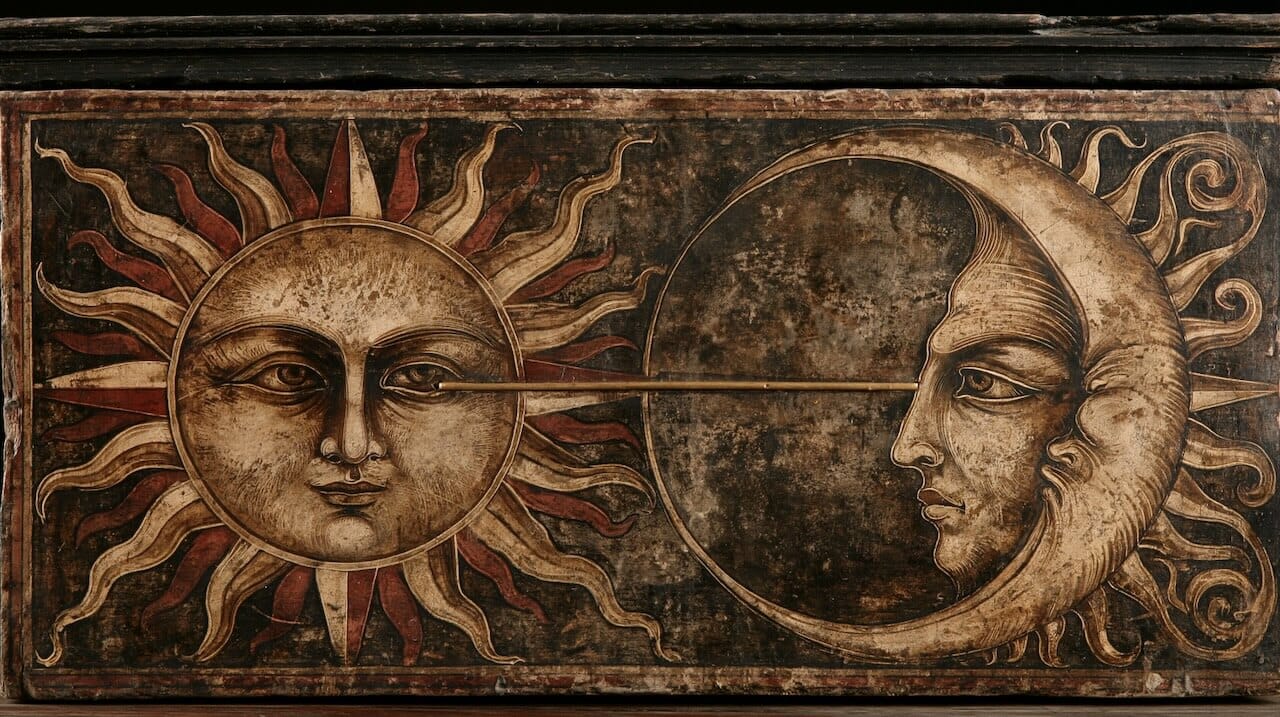
This page is an introduction to depth psychology and to the study of consciousness as I understand them, after more than twenty years of study and practice. I am Daniel Paulus.
These are two halves of one inquiry. Psychology maps the inner landscape, the forces that move a person beneath awareness, the shadow, the complexes, the patterns that repeat. The study of consciousness asks a different and older question: who is it that watches all of this. Psychology works with the contents of the mind. The study of consciousness asks about the awareness in which those contents appear.
I work from Jungian depth psychology and from the Vedic tradition, which described the same inner territory in its own language long before. I do not merge them into one doctrine. I translate between them, I show where they agree and where they part, and I treat meditation as one of the instruments that carries a person from the first inquiry to the second.

Most of what shapes a life runs below conscious awareness. Depth psychology gives that hidden material a language. The Vedic tradition gives it a practice, and asks a further question Western psychology rarely reaches: not only what is in the mind, but what consciousness itself is. This page covers both. The structure of the psyche, the shadow, dreams, archetypes, and individuation; then states and structures of consciousness, the five koshas, what neuroscience can and cannot show, and meditation as the instrument between them. Written by someone who works inside both traditions rather than describing them from outside.
On this page
1. Why psychology and consciousness belong together
3. What makes the Jungian approach distinct
5. Dreams and active imagination
6. Archetypes and the personal myth
7. The mandala and the alchemy of transformation
10. States and structures of consciousness
12. What science can and cannot show
13. The bridge: Jung and the Vedic tradition
14. Meditation as an instrument
15. Why understanding is not enough
1. Why psychology and consciousness belong together
Most people meet these two words separately. Psychology sounds like therapy, like fixing what is wrong. Consciousness sounds like philosophy or like something vague and spiritual. I keep them on one page because in practice they are one movement, and separating them is what leaves both incomplete.
Here is the distinction that holds the whole page together. Psychology, as I work with it, is the study of the contents of the inner world: the memories, the drives, the wounds, the images, the patterns that run a life from below. The study of consciousness is the inquiry into the awareness within which all those contents appear. One asks what is in the mind. The other asks what the mind is, and who is looking.
The two cannot be done well in isolation. A person who works only on psychological content, naming wounds, tracing patterns, integrating the shadow, can grow more whole and still never ask who it is that has all these experiences. And a person who reaches for consciousness directly, through meditation or through a peak experience, while ignoring their own unexamined psychology, tends to build a spiritual identity on top of unintegrated material. The tradition has a blunt name for that second error, and so does Jung. I will come back to it.
So the order on this page is deliberate. First the map of the inner landscape, the psychological work. Then the question of the one who walks it, the work with consciousness. Then the instrument that moves between them, meditation, and the bridge between the two traditions that describe the whole.
2. What depth psychology is
Psychology is the systematic study of the soul, the mind, and consciousness: how a person develops, what divides them inside, what moves them, and how change becomes possible. It is not only the study of reactions to external stimuli, nor only the treatment of disorders. At its centre is a deeper question, how a person becomes themselves.
One of its central themes is the relationship between the conscious and the unconscious, between what we are aware of and what stays hidden, suppressed, or forgotten, yet still shapes a life. The basic questions it opens are concrete: how identity and self-image form, how our defences work, why we repeat certain patterns in relationship, what the stages of inner development are, and what maturity, wholeness, or inner freedom actually mean.
Across the twentieth century many schools formed, from behaviourism through psychoanalysis and humanistic psychology to depth psychology, which concerns itself with symbols, dreams, archetypes, unconscious structures, and the spiritual dimension of a human life. It is the last of these I work from, and within it, above all, the Jungian approach, which gave us the working language of shadow, Self, anima and animus, and individuation, the path towards inner wholeness whose horizon comes close to what the contemplative traditions mean by awakening.
Modern psychology no longer stands in opposition to the inner life. Conscious work with the body and breath, the contemplative traditions of the East, the empirical study of consciousness, and the experience of spiritual crisis and transformation have all become part of its field. Psychological knowledge, at its best, is a bridge between inner experience, emotion, the body, and a deeper sense of meaning.
It is worth pausing on why depth psychology in particular, rather than the more visible mainstream approaches, is the ground I stand on. Much of contemporary psychology has narrowed itself, understandably, to what can be measured, managed, and delivered in a fixed number of sessions: symptom reduction, behavioural change, the regulation of mood. This is genuinely useful, and for acute distress it can be the right and necessary tool. But it tends to treat the symptom as the enemy and its removal as the goal, and it has comparatively little to say about meaning, about the second half of life, about why a successful person with no diagnosable disorder can feel that their life is hollow. Depth psychology starts from a different premise. It asks what the symptom is for, what it is compensating, what it is trying to bring to attention. It treats the psyche as purposeful rather than merely broken, and it takes seriously the dimensions of a human life, meaning, symbol, the sacred, that a purely clinical frame brackets out. That is the tradition this page belongs to, and it is the tradition my readers tend to have been looking for without knowing its name.
3. What makes the Jungian approach distinct
Jungian psychology, also called analytical psychology, differs from other schools above all in how it understands wholeness, and in its insistence that the psyche is not made of consciousness alone but of a vast unconscious with its own logic, dynamics, and development. That unconscious holds both personal material that was suppressed or forgotten, and what Jung called the collective unconscious, the universal patterns and images shared across humanity.
What makes the approach distinct, in practice:
Symbolic thinking. Dreams, myths, fairy tales and rituals are read as the natural expression of the unconscious. Not a surface to be decoded once and discarded, but a language to be listened to.
The shadow. Rather than suppressing the unwanted parts of a personality, Jung pointed to the need to recognise and integrate them.
Individuation. The development of personality is not mere adaptation to one's surroundings but an inner process in which a person becomes who they actually are.
Anima and animus. The inner contrasexual principles, present in everyone regardless of sex, whose mutual balancing is part of inner growth.
The Self. The aim is not to inflate the ego but to find the centre that holds the whole inner order of a person.
Jung was unafraid to think beyond the psychology of his time. His sources reached into Eastern philosophy, alchemy, religious symbolism and old ritual systems, which let him build a bridge between psychology, spirituality and culture. Unlike approaches that aim only to normalise outward behaviour, the Jungian view asks not just how to change a problem, but what the problem means and what part it plays in the whole development of a person.
4. The shadow
The shadow is Jung's term for the parts of a personality we have not admitted, have suppressed, or have pushed out of sight, because they did not fit the image we held of ourselves, or the image others wanted from us. It can hold anger, vulnerability, strength, sexuality, creativity, but also fear, envy, or impulsiveness.
What we refuse does not disappear. It stays in the unconscious, and if we do not work with it consciously, it begins to show up at the wrong moment, in relationships, in emotion, in the body, in the recurring crises of a life.
Working with the shadow does not mean removing what is unwanted. It means coming to know and accept what was suppressed, giving it language and room without being ruled by it. The shadow often holds not only what we judged as bad, but what was too strong, too vivid, or too free for us to carry when we were young. This is why integration so often releases vitality, creativity, and authenticity, and not only relief from a symptom.
There is a way to begin to see one's own shadow, since by definition it is what we do not see directly. Notice the emotional reactions that do not fit the situation. Notice what disturbs you most intensely in other people, because strong charge often marks projected material. Watch the patterns that repeat in relationship. And look closely exactly where you say "that is not me", because that sentence is often spoken at the door of the shadow.
The shadow forms not through catastrophe but through ordinariness. Robert Johnson, one of the most precise writers on Jungian shadow psychology, described this in his book Owning Your Own Shadow with unusual clarity. Every child arrives with the full range of human capacities: aggression and tenderness, curiosity and fear, desire and withdrawal, joy and grief. The work of growing up requires selecting some of these for expression and suppressing others, and what is selected and what is suppressed depends on the particular environment, the family, the culture, the specific demands of the people around whom the personality forms. The result is a persona, the acceptable and functional version of the self that can belong, and a shadow, everything that could not be included. The shadow is built, in other words, by the thousand small adjustments that are each individually reasonable and that collectively produce a personality significantly smaller than the person who inhabits it.
There is one part of the shadow that surprises people, and Jung was explicit about it. The shadow is not only a container of what we judged bad. It is also, in his phrase, a container of gold. The qualities suppressed earliest and most completely are often the most vital. What we find most shameful or most impossible to claim in ourselves frequently points towards what is most genuinely ours. This is the golden shadow, and it is often harder to reclaim than the dark one, because the resistance is different. With the dark shadow the obstacle is shame. With the golden shadow the obstacle is disbelief, the quiet conviction that this strength, this gift, this largeness could not possibly belong to me. The admiration we feel for a quality in another person that we are sure we lack is one of the most reliable signs of where our own buried capacity lies.
One distinction matters more than any other here, and it is where most popular shadow content goes wrong. The shadow is not the same as trauma. Trauma is what happened to you. The shadow is what you became in response, and equally what you suppressed that had nothing to do with injury at all. The two overlap, because some of what we suppressed we suppressed because it was hurt. But they are not the same process and they do not respond to the same methods. Trauma work addresses what happened to you and its effects on the nervous system and memory. Shadow work addresses what you became: the exclusions, suppressions, and projections that accumulated as the personality adapted. Mistaking one for the other turns shadow work into endless wound-cataloguing that never reaches integration, which is precisely the dead end so many thoughtful people arrive at after years of conscientious inner work that changed very little.
That dead end deserves a name, because it is so common. A person reads Jung, attends the workshops, keeps the journal, and can describe their shadow contents with real precision. They know they suppressed anger in childhood, they know the family context, they can trace exactly how the unexpressed anger now shows up as resentment towards arbitrary authority. And none of it has changed their behaviour, because seeing a pattern is a cognitive operation and the shadow does not live primarily in cognition. It lives in the body, in automatic reaction, in projection, in the gap between intention and behaviour. This is the difference between awareness and integration, and it is the hinge on which all real shadow work turns. Awareness is necessary and it is not sufficient. Integration means the energy locked in the shadow becomes available to the conscious personality, so that anger can become a clean boundary, ambition can become direction, grief can become depth. That is a structural change, not an insight, and structural change requires more than reflection. It requires encounter, and usually it requires relationship, because the shadow was largely formed in relationship and integrates, to a significant degree, in relationship as well.
5. Dreams and active imagination
Dreams have been understood across cultures as messages of the soul. Depth psychology returns them to that role, as carriers of information from the unconscious. A dream is not read literally, nor as a mechanical cipher, but as an image in the language of symbol, whose meaning is found in relation to the dreamer's life. A single dream image often carries several layers at once: the personal, what it means for this particular person; the collective, its archetypal resonance; and the developmental, how it fits the ongoing process of individuation.
I use the verb translate here deliberately, not interpret. A dream is translated, not decoded, and the final say belongs to the dreamer. Without direct work with the person, only amplification is appropriate, opening the range of what an image might mean, never assigning it a single fixed meaning. Anyone who hands you the definitive meaning of your dream has told you more about their authority than about your psyche.
Alongside dream work sits active imagination, the method Jung developed for a conscious dialogue with the unconscious. It is not fantasy and not guided visualisation. It is a process in which a person observes inner images or figures and lets them develop on their own while remaining an attentive, awake witness. It is used after a strong dream that stays opaque, when motifs repeat, to recognise a conflict between parts of the personality, or as an inner conversation with a symbolic figure.
Jung warned that active imagination should not be undertaken lightly or without guidance, because the contents can overwhelm the conscious mind. This is worth holding onto, because it tells us something about Jung's own honesty: his most powerful method required relationship, preparation, and transmission. He did not believe the deep work could be done safely alone or from a book.
6. Archetypes and the personal myth
Archetypes are universal patterns of experience and behaviour that appear across time and culture, in myth, dream, fairy tale and ordinary life. They are not learned ideas but inborn forms that give structure to the inner world. Among the basic ones: the Mother and Father, the relationship to origin, safety, and authority; the Hero and the Shadow, the drive to grow and the hidden destructive tendency; the Magician, the Sage, and the Trickster, the figures of knowledge, intuition, and the overturning of order; the anima and animus, the inner feminine and masculine; and the Self, the archetype of wholeness and the centre of the personality.
Symbols are how these patterns show themselves, in dreams, images, and bodily feeling. A symbol is not fixed. The same image can mean different things to different people depending on context and stage of life. Jung saw work with symbols as a way to make living contact with the unconscious, and so to support inner change. A symbol is not a sign to be looked up in a key. It is a living image that invites association, intuition, and deeper self-understanding.
Each of us also lives inside a story we tell about our own life, consciously and unconsciously. Jungian psychology calls this the personal myth. Unlike a biography, it records not what happened but what a person makes it mean. It is the frame that joins the inner and outer world: why I am here, what keeps happening to me, what calls me, what I refuse. Left unexamined, the personal myth can run a life from below, as the identity of the victim, the fighter, the rescuer, the unseen one, the outsider, usually formed early, in family and culture. To work with it is not to rewrite the past, but to recognise the motifs that repeat, to name what is missing or was pushed out, and to listen for what is trying to live through a person.
7. The mandala and the alchemy of transformation
Two of Jung's least understood and most useful contributions sit between the archetypes and the work of individuation, and they show how seriously he took the symbolic life. The first is the mandala. The word comes from Sanskrit and means circle, or centre. In the Eastern traditions the mandala was used for centuries as an instrument of concentration, visualisation, and inner orientation. Jung took the symbol and developed its psychological meaning as an image of the wholeness and structure of the psyche. He observed that when people spontaneously draw or shape their inner experience, especially in periods of crisis or change, they very often produce circular forms with a centre that radiates outward. He read this as an archetypal pattern, the natural effort of the psyche to order inner chaos, to find a centre and bring meaning where there is dispersion or tension. Seen this way the mandala is a map of consciousness in which the centre stands for the Self and the parts arrange themselves in relation to it. It is not an art object to be judged from outside. It is a visual language of inner experience, and its meaning belongs to the one who made it.
The second is alchemy, which Jung spent the last decades of his life studying, and which most people dismiss as a historical curiosity. He saw that the alchemists, while ostensibly trying to turn base metal into gold, were in fact projecting the stages of inner transformation onto their materials, and that their strange images formed a remarkably precise symbolic record of what happens in the psyche during deep change. The broad movement they described runs through three phases that any honest inner work recognises. The nigredo, the blackening, is the encounter with the shadow and with despair, the dissolution of the old self-image, the part everyone wishes they could skip and no one can. The albedo, the whitening, is the washing and clarifying that follows, the slow return of light and discernment. And the rubedo, the reddening, is the integration in which the transformed material rejoins ordinary life, no longer split off. The value of this old symbolic system is not that it is literally true but that it refuses the modern fantasy of clean, painless, upward growth. It insists that real transformation passes through a darkening, and that the darkening is not a failure of the process but part of it.
8. Individuation
Individuation is the process by which a person gradually becomes who they truly are, not according to the expectations of others but in line with their own inner structure, their symbolic motifs, and the particular development of their consciousness. It is one of the central themes of Jungian psychology, and it is not a goal reached by a single decision. It is a long process, not always easy: knowing one's own identity, facing the shadow, integrating unconscious aspects, and slowly approaching the Self, the wholeness of the personality.
It is worth being precise about what individuation is not. It is not self-improvement, the addition of good qualities to an existing self. It is not adaptation, becoming a smoother fit for one's surroundings. And it is not the achievement of a perfect self. It leads not to a flawless person but to a whole and conscious one, a person in conscious relationship to all of what they are, including what was previously excluded.
This is the hinge where psychology opens onto the question of consciousness, and where the next half of this page begins. Because the further individuation goes, the more it stops being only a matter of rearranging inner content and becomes a question about the one who is aware of all that content at all.
Seen from the East, individuation can be set beside the idea of awakening, though the two are not identical and the difference is instructive. Awakening, as understood in Advaita Vedānta or in Buddhism, is not an escape from human life but its full seeing-through, a direct recognition of one's true nature without identification with the ego, the role, or the personal history. Individuation and awakening both point towards the loosening of the grip of ego, towards a centre deeper than the constructed self. But Jung was careful, and rightly so, about the order of operations. He argued that the Western person needs first to build a strong, responsible conscious ego, and only then open safely to the transcendent, whereas much Eastern teaching begins closer to the dissolution of ego because it grew in a culture that supplied that ego-strength differently. To take the Eastern instruction to dissolve the ego, handed to a Western person who never built a stable one, is to invite collapse rather than liberation. This is exactly the kind of place where translation matters and synthesis fails. The traditions point towards a similar horizon by different routes and in a different order, and the useful thing is to name that honestly, not to flatten it into a single slogan about letting go of the self.
9. What consciousness is
Now the second half of the title, and the harder word. Consciousness is not the same as the contents of the mind. Thoughts, emotions, memories, images, sensations are contents. Consciousness is the awareness in which all of them appear and disappear. You can watch a thought arise and pass. The watching is not the thought. That simple observation, easy to say and surprisingly hard to stay with, is the doorway to the entire inquiry.
Western thought has circled this for centuries and named the difficulty plainly. We can explain, in principle, how the brain processes information, regulates the body, and produces behaviour. What resists explanation is why there is any inner experience accompanying it at all, why it is like something to be you. Materialist science tends to treat consciousness as a by-product of the brain. The contemplative traditions begin from the opposite end, from consciousness as the primary fact, the one thing that cannot be doubted because it is what is doing the doubting.
I do not pretend to settle that question, and I am suspicious of anyone who claims to have. What I can say is that the traditions I work from treat consciousness not as a belief to be argued but as something to be investigated directly, through disciplined attention, in the only laboratory available, which is one's own awareness. Stanislav Grof, whose work I studied, described consciousness as a field that reaches beyond the individual brain, on the basis of decades of observation of non-ordinary states in which people reliably accessed material the brain-as-producer model struggles to explain. I hold his conclusions as serious data to be reckoned with rather than as proof, but the direction is clear: the assumption that consciousness is simply manufactured by the brain is an assumption, not an established fact, and it is worth holding it as such. The Vedic tradition described the same recognition in its own language thousands of years earlier, when it spoke of a witnessing awareness that is not produced by the mind but is the ground in which the mind appears.
This is why the meeting point of Jungian psychology and the Vedic tradition, which is the ground I work from, is not eclecticism. It is the joining of two of the deepest maps of the human psyche and of consciousness that we have, one developed in the modern West through clinical observation, the other refined over millennia of contemplative investigation in the East. Jung gave the West a rigorous language for the unconscious and its contents. The Vedic tradition gives a rigorous account of consciousness itself, of the levels of mind, and of the states of awareness, an account the West has barely begun. Each is strongest exactly where the other is thin. That is what makes them worth holding together, and it is also why holding them together is translation between two complete systems, not the manufacture of a third.
There is a practical reason this matters and is not only philosophy. How you answer the question of what consciousness is changes what you do with your own attention. If consciousness is only a by-product of brain chemistry, then the inner life is froth on a material process and there is nothing to investigate, only states to be optimised. If consciousness is the primary fact, then attention itself becomes the instrument of the most important inquiry available to a human being, and the disciplines that train attention, meditation above all, stop being relaxation and become a form of research. Most of the people I work with arrive having been told, implicitly, the first story, and discovering they no longer believe it, without yet having anything to put in its place. This page, and this work, is one attempt to put something rigorous in its place.
10. States and structures of consciousness
Once you grant that consciousness can be investigated, two distinctions organise almost everything that follows: states and structures.
States of consciousness are the conditions awareness passes through. The Vedic tradition mapped them with great care long before modern psychology, in the Mandukya Upanishad and elsewhere: waking, dreaming, and deep dreamless sleep, and beyond these three a fourth, turīya, the awareness that underlies and witnesses the other three. The ordinary person identifies entirely with the waking state and assumes it is the whole of who they are. But notice, the tradition says, that something in you was present in all three states. Something knew you had slept deeply and woke to report it. That continuity, the awareness that is not cancelled when the waking mind switches off, is the thread the contemplative traditions follow inward. They claim, and they ask you to verify rather than believe, that there is awareness that does not belong to any single state but holds them all, and that it is closer to what you actually are than the changing contents you normally call yourself.
This is not as abstract as it sounds, and it connects directly to the psychological work. Dreams, which depth psychology reads as messages from the unconscious, are simply the contents of one of these states. The Vedic map and the Jungian map are looking at the same nightly territory from two angles: Jung asks what the dream means, the Vedic tradition asks what awareness the dream appears within. Held together, they are richer than either alone, which is the whole argument of this page in miniature.
Structures of consciousness are something else, and confusing them with states is one of the commonest errors in popular spiritual writing. Structures are not passing conditions but the developmental forms through which human awareness itself has grown, both across cultural history and within a single life. Jean Gebser, in The Ever-Present Origin, described a sequence of such structures, archaic, magic, mythical, mental, and a possible emerging integral structure, and argued that the modern West is living through the exhaustion of the mental-rational structure and the difficult birth of the integral one. He did not mean this as a metaphor. He meant that the very mode in which consciousness constitutes a world has changed before and is changing again. Ken Wilber, building on this lineage, described integral consciousness as the capacity to include and honour the earlier structures without being trapped in any single one of them, neither regressing to the magical nor absolutising the rational. This is not an elite spiritual attainment reserved for the few. It is the natural result of sustained inner work, and part of why that work matters beyond the individual: a culture is made of the structures of consciousness its people inhabit.
The reason to hold states and structures together, rather than picking one, is that each corrects a characteristic error of the other. Someone who knows only the language of states can have a deep meditative opening and still interpret it through a primitive or inflated structure, which is how genuine experiences produce grandiose teachers. Someone who knows only the language of structures can develop a sophisticated, integral intellectual framework and never once taste the states it describes, which is how consciousness studies produces brilliant people who have never actually looked. The states give depth, the structures give development, and a serious path needs both axes. This is the difference between taking consciousness seriously and taking it romantically.
11. The map of the koshas
The Vedic tradition offers one of the most useful maps for joining psychology and consciousness, because it refuses to split the person into body on one side and mind or spirit on the other. It describes the human being as five levels, the pañca kosha. I translate kosha as level, not sheath or wrapper, because level keeps the sense of depth rather than of clothing to be removed.
The five, from the outer to the inner: the level of matter, annamaya, the physical body built from food; the level of prāṇa, prāṇamaya, the vital energy and breath that animates the body; the level of mind, manomaya, the ordinary thinking and feeling mind that takes in the world through the senses and reacts; the level of discernment, vijñānamaya, the faculty of viveka that can tell the real from the unreal, the essential from the passing; and the level of bliss, ānandamaya, the subtlest and most inward, closest to the ground of awareness itself. These are not five separate things stacked like floors. They interpenetrate, and a disturbance at one level shows up at the others, which is why anxiety lives in the breath and in the gut as much as in the thoughts, and why working with the breath can quiet the mind.
What makes this map valuable for the work on this page is that it places psychological material and consciousness on a single continuum rather than in separate compartments. The wounds and patterns that depth psychology works with live largely at the level of mind, manomaya. The faculty that individuation slowly strengthens, the growing ability to tell the voice of the ego from the voice of the deeper Self, is exactly what the tradition calls vijñānamaya, the level of discernment. And the awareness that the contemplative inquiry points to underlies all five levels without being reducible to any of them. The map shows, in one image, why the inner work cannot be only psychological and cannot be only spiritual. The purely psychological worker stays at the level of mind and never reaches discernment or the ground beneath it. The bypassing spiritual seeker tries to leap to the level of bliss while leaving the wounds at the level of mind untouched, which is why their peace is so brittle and collapses under ordinary pressure. The work has to move through the levels in order, and that ordered movement is precisely what a tradition, as opposed to a technique, provides.
There is a quiet but important correction the kosha map makes to a common Western habit. We tend to treat the body as separate from and lower than the mind, and the mind as separate from and lower than the spirit, a hierarchy of contempt running upward. The kosha map is not a hierarchy of contempt. Each level is a real level of the one person, none is to be despised or escaped, and the movement inward does not abandon the outer levels but includes them. You do not become more conscious by leaving the body behind. You become more conscious by inhabiting all five levels at once, with awareness resting in the ground that holds them.
12. What science can and cannot show
For a sceptical reader, and I write for sceptical readers, it matters that consciousness is not only a matter of old texts and inner report. It can be studied empirically, at least at its edges. The neuroscience of meditation, in the work of researchers such as Richard Davidson and Antoine Lutz, has documented measurable changes in the brain under sustained meditative practice, from structural changes in the prefrontal cortex to changes in the reactivity of the amygdala. Consciousness, or at least its correlates, can be measured, and it can be worked with.
I hold this evidence carefully, in both directions. It is real, and it is worth knowing, because it shows that contemplative practice is not merely subjective mood. But it does not do what some popular accounts claim. Showing that meditation changes the brain does not explain consciousness. It identifies some of the physical conditions that accompany a state of consciousness, which is a different thing from accounting for the experience itself. The measurement reaches the correlates, not the experience. So I use the science as a floor, not a ceiling: it establishes that this is a serious domain with observable effects, and it leaves the central question, what consciousness is, exactly where the traditions left it, as something to be investigated from the inside.
There is a particular trap I want to name, because my readers are exactly the people likely to fall into it. The neuroscience is reassuring to the educated sceptic, and that reassurance can quietly become a substitute for the practice itself. It is possible to become fluent in the studies, to know the names and the brain regions and the effect sizes, and to use that fluency as a sophisticated reason never to sit down and actually look. The research can become one more thing to read about consciousness instead of one more reason to investigate it directly. The findings are an invitation through the door, not a replacement for walking through it. I offer the science here so that a sceptical reader can take the rest of this seriously, not so that they can stop at the science and call the matter handled.
It is also worth being honest about the limits of the research even on its own terms. Most studies measure novice or moderately experienced practitioners over relatively short periods, because those are the people available to study. The states the tradition is most interested in, the deep absorptions, the stable shift in the sense of self, are rare, hard to produce on demand, and hard to bring into a scanner. So the science we have is real but it samples the shallow end. This is not a reason to dismiss it. It is a reason to treat it as the beginning of a serious empirical engagement with consciousness, not its conclusion, and to keep the older, first-person science of the contemplative traditions in the conversation rather than discarding it as pre-modern.
13. The bridge: Jung and the Vedic tradition
Already in the first half of the twentieth century Jung understood that Western psychology could not develop in isolation from the philosophical and religious systems of other cultures. He was one of the few European psychologists of his time to openly acknowledge the value of Eastern philosophy, particularly the yogic, Buddhist, and Taoist traditions. He was not drawn to the East out of exotic curiosity, but because he found there, examined over thousands of years, what Europe was only beginning to rediscover as modern psychology: work with the mind, the observation of thought, non-identification with the ego, the symbolic rendering of a spiritual path.
He admired specific things: the symbolism of the chakra system, which he read as a map of the development of consciousness; the practices of concentration and discernment, which he saw as a counterpart to individuation; the relationship between personal identity and universal consciousness known from the Upanishads. And yet he insisted, rightly, that the Western person cannot simply take over the Eastern path without context. He argued for finding "a Western form of the same content", a bridge between the spiritual tradition and individual psychological experience.
This is exactly the position I work from, and it is worth being precise about what it is and is not. I do not build a synthesis that dissolves Jung and the Vedic tradition into one new teaching. I consider such a synthesis neither possible nor desirable, because people, cultures, and traditions are genuinely different and need different instruments and combinations of them. What I do is translate between them, show the same principle appearing in two languages along with the places where they diverge, and help a person choose and combine the tools that fit them. The aim is not another doctrine. The aim is for the person to walk their own path with better maps.
There is a real distinction inside this bridge that I keep. Jung insisted the Western person should first strengthen the conscious ego and take responsibility, and only then open safely to the transcendent. Much Eastern teaching begins closer to the dissolution of the ego. Both point towards a similar horizon, the union of inner opposites, the seeing-through of identification, but by different routes and in a different order. Naming that difference honestly is more useful than pretending the traditions say one identical thing.
14. Meditation as an instrument
Meditation belongs on this page not as a separate subject but as the instrument that carries a person from the study of psychological content to the direct investigation of consciousness. It is one of the instruments, not the only one, but it is the most direct, because it works not through concepts but through experience.
In the tradition I work from, meditation is not a relaxation technique, and not the management of stress, though calm is often a by-product. It is a systematic method for understanding what the mind is, and ultimately what consciousness is. The classical sequence is precise: concentration, dhāraṇā, the gathering of scattered attention; meditation proper, dhyāna, sustained and effortless attention; and absorption, samādhi, in which the ordinary separation between the one who observes and the observed begins to dissolve. This is a different project from calming down, and it requires a different kind of instruction.
This is also why many intelligent, serious people conclude that meditation does not work for them. Usually they were handed a stripped-down fragment of mindfulness, a useful entry-level tool, and told it was the whole thing. When it does not deliver what they actually wanted, which is to understand what they are, they assume they have failed. They have not. They were given a tool designed for a different purpose than the one they needed. The reduction is understandable, because the stripped-down version is easier to teach, easier to secularise, and easier to sell, but it leaves the serious seeker stranded at the doorway, mistaking the doorway for the building.
It helps to see where the stages actually lead, because the classical sequence is not arbitrary. Concentration, dhāraṇā, comes first because an untrained attention cannot investigate anything; it scatters at the first discomfort. Gathering attention is the precondition, not the goal. From sustained concentration arises dhyāna, meditation proper, where attention rests on its object without the constant effort of returning, and the noise of the surface mind begins to settle. And from deep dhyāna can arise samādhi, absorption, in which the habitual gap between the one who observes and the thing observed thins and, in the deepest reaches, dissolves. This is no longer about feeling calmer. It is the direct investigation of the central claim of the whole contemplative tradition, that the separate observing self is not the bedrock it appears to be. You do not have to take that claim on faith. The practice is the method for testing it, which is exactly why I call meditation an instrument and not a balm.
A word on what meditation is not, since this is where the most damage is done. It is not a way to bypass the psychological work described in the first half of this page. A person who meditates diligently while refusing to look at their shadow does not transcend the shadow; they build a more spiritual-looking container for it, and the unintegrated material simply reappears in their relationships, their teaching, their use of power. This is the specific failure the tradition and Jung both warned about, and it is why on this page meditation sits after the psychological work and not instead of it. The instrument is powerful precisely because it is aimed at consciousness itself, and an instrument that powerful, pointed at a personality full of unexamined material, magnifies what is there rather than resolving it.
15. Why understanding is not enough
There is a trap that waits specifically for thoughtful people, and I want to name it directly because my readers are prone to it. It is possible to read everything on this page, to understand the shadow, individuation, the koshas, the states of consciousness, and to change nothing, because understanding has quietly become a substitute for the work.
The Vedic tradition has a name for this: kevala śravaṇa, mere hearing or mere learning. It is valuable, and it is not sufficient for any real transformation. Reading about consciousness without practice is like studying maps without ever travelling. Marie-Louise von Franz described the same danger from the Jungian side with great precision: the person who knows about their pattern but does not live differently is not better off than the person who does not know, and is sometimes worse off, because the knowledge becomes a substitute for the actual movement.
The opposite error is just as common: the isolated peak experience. A retreat, an intensive, a psychedelic session can open a window onto another state of consciousness. Without sustained integration and continuous practice the window closes, and experience without structure dissolves. What actually works is less dramatic and more demanding: systematic practice with someone who understands the tradition, study that joins West and East without reductive simplification, and a genuine community, satsanga in its original sense, an environment that supports inner development rather than quietly undermining it.
These two errors, mere learning and the isolated peak, look like opposites but come from the same source: both want the result without the continuity. The reader wants to understand without being changed; the seeker wants to be changed without the slow work that makes a change hold. The corrective for both is the same, and it is unglamorous. It is regular practice maintained over years, not intensity in bursts. Knowing about the inner life and living it are not the same, and only sustained practice closes the gap between them. The part of my readers most resistant to this is usually the part most accustomed to acquiring competence quickly through reading. Here that strength becomes the obstacle.
16. The body and the nervous system
None of this is purely mental, and any account that floats free of the body is incomplete. Fear is a natural part of the psyche, an evolutionary protection. When the body and nervous system stay in a state of threat after the danger has passed, we speak of a traumatic response. Trauma need not come only from extreme events; it can take the form of chronic tension, overload, or a long absence of safety in early life. What matters is not what happened outwardly but whether the organism could meet it.
Processing does not happen through understanding alone. The nervous system needs a new experience of safety, contact with the body, and the gradual release of old defensive patterns. This is why the inner path moves through the level of the body and the level of prāṇa, not over them. The body is not an obstacle to consciousness but one of its instruments, a principle the Vedic tradition understood directly and that modern work on trauma has rediscovered. In the Jungian frame, trauma can even become a doorway to meaning, not by romanticising injury, but by listening to what in us went silent and now asks for attention.
17. Wholeness as the aim
Psychological work, whether through dialogue, dream, imagination, or the body, does not aim at perfection, nor at a cure in the ordinary sense. Its aim is wholeness: a state in which a person knows and accepts the different parts of themselves without being wholly identified with any of them.
Wholeness is not flawlessness. It is a conscious, open, and responsible relationship to oneself: knowing one's strengths and one's vulnerable places, telling the voice of the ego from the voice of the deeper Self, listening to one's emotions, dreams and body, integrating what was once suppressed, and living with more inner consistency and meaning. From the Jungian view, it is the integration of opposites, light and shadow, reason and feeling, conscious and unconscious, that allows a person to grow.
And here the two halves of this page meet. The psychological work makes a person whole at the level of content. The work with consciousness asks who it is that is now whole, and rests, finally, not in a better self-image but in the awareness that was there before any image formed. Wholeness is the work of a lifetime, and it is not a state reached once and kept. It deepens, in time, through the stages of a life.
It is worth saying plainly what wholeness is not, because the word is easily sentimentalised. It is not happiness, and it is not the absence of conflict. A whole person still feels grief, anger, fear, and desire; what changes is that these are no longer split off, projected, or denied, and so they stop running the person from the dark. Wholeness is not the elimination of the shadow but a conscious relationship to it. Jung was blunt that the goal of the work is not to become good in the conventional sense, the agreeable person who has suppressed everything inconvenient, because that person is not virtuous, only harmless, and easily ruled. The goal is to become whole, which includes owning one's capacity for anger, force, and refusal, and holding it consciously rather than acting it out unconsciously. A person who has integrated their darkness is not dangerous in the way the unintegrated person is, precisely because nothing is operating behind their own back.
This is also where the Western and the contemplative pictures finally rhyme without becoming identical. Jungian wholeness is the integration of the opposites within the personality. The contemplative recognition is that there is an awareness prior to the personality altogether, in which the whole drama of integration is seen. The first makes the self habitable. The second loosens the grip of the self entirely. You do not have to choose between them, and in my experience they happen in that order: first you become someone, fully and consciously, and only then can you begin to see, without terror, that you are also the awareness in which that someone appears. The psychological work makes a stable self. The work with consciousness recognises the awareness within which that self has been arising all along.
18. What this is not
This is not therapy, and I am not a therapist or a clinician. I hold no clinical licence and I make no claim to one. I am someone whom this material has taken hold of, who has studied and, more importantly, lived it for over twenty years. I speak from that, not from a title, and I find that position truer than a borrowed authority.
It is also not a self-improvement programme, and not a synthesis that dissolves Jung and the Vedic tradition into a single new doctrine. I translate between them and I guide; I do not build another dogma. It is not a shortcut. The window opened by an intense experience, including a chemical one, is not the same as the slow structural change that integration and practice bring. And nothing here is a substitute for medical or psychiatric care. This work sits alongside such care, never in place of it. If you are in crisis, the first step is professional help, not a meditation technique.
19. Questions
Yes. Jungian psychology in particular meets yogic philosophy and the Vedic tradition naturally, especially around work with the mind, the transformation of the ego, conscious living, and the integration of the parts of a person. Both aim at inner balance, self-understanding, and conscious development. The point is not that they are identical, but that they map the same territory in different languages.
Most therapeutic approaches work primarily with conscious thought and behaviour. The Jungian approach goes deeper, to symbols, archetypes, dreams, and the personal myth. It does not only address a problem; it develops a relationship to the whole inner world.
Trauma is what happened to you and its effects on the nervous system and memory. The shadow is what you became in response, plus everything you suppressed that had nothing to do with injury at all. They overlap but are not the same, and they do not respond to the same methods. Mistaking shadow work for trauma processing is one of the most common errors in popular content.
The lifelong process of becoming who you actually are, rather than who you were shaped to be. It involves facing the shadow, integrating unconscious material, and approaching the Self, the centre of wholeness. It is close, but not identical, to what the Eastern traditions call awakening.
The contents of the mind are thoughts, emotions, memories, images. Consciousness is the awareness in which those contents appear and pass. Depth psychology works mostly with the contents; the contemplative traditions investigate the awareness itself.
No. Relaxation is often a by-product, but in the tradition I work from meditation is a systematic method for understanding the mind, moving through concentration, sustained attention, and absorption. Most Western meditation teaches a useful fragment and presents it as the whole.
Its correlates can. The neuroscience of meditation documents real, measurable changes in the brain. But measuring the correlates is not the same as explaining the experience. Science establishes that this is a serious domain; it does not close the central question.
No. I am not a therapist or clinician and hold no clinical licence. This is teaching and guidance grounded in long study and practice, and it sits alongside professional care, never in place of it.
20. Where to go next
Read. My essays on depth psychology and consciousness appear on Substack, roughly every week or two. They are the main place this work exists in written form.
Work with me. For those who want to take this from reading to their own sustained inner work, I take a small number of people into individual guidance over six to twelve months.
21. Sources and references
The substance of this page rests on primary sources, on the scholars of the tradition, and on the living lineage in which I was initiated.
On myth and the psyche: C. G. Jung: The Archetypes and the Collective Unconscious (CW 9i) C. G. Jung: The Psychology of Kundalini Yoga. Notes of the Seminar Given in 1932 (ed. Sonu Shamdasani, 1996) Joseph Campbell: The Hero with a Thousand Faces (1949) Erich Neumann: The Origins and History of Consciousness (1949) Jean Gebser: The Ever-Present Origin (1949) Mircea Eliade: The Sacred and the Profane (1957) and The Myth of the Eternal Return (1949) Robert Bly: Iron John. A Book About Men (1990) Robert A. Johnson: He, She, and We, and the reading of the Grail and of Eros and Psyche James Hillman: writings on image and the soul Marie-Louise von Franz: The Interpretation of Fairy Tales and writings on the feminine Heinrich Zimmer: Myths and Symbols in Indian Art and Civilization (1946)
On tantra, primary and scholarly: Abhinavagupta: Tantrāloka (the Light of Tantra) The Vijñāna Bhairava Tantra, on the methods of meditation Sir John Woodroffe (Arthur Avalon): The Serpent Power (1919) Georg Feuerstein: Tantra. The Path of Ecstasy (1998) Christopher Wallis: Tantra Illuminated (2012) Mark Dyczkowski: writings on the Spanda and Trika traditions David Frawley: Tantric Yoga and the Wisdom Goddesses (1994)
On the living tradition: The Śrī Vidyā lineage, through initiation with Sri Shivapremananda and in the Devipuram tradition founded by Sri Amritananda Natha Saraswati and Sri Annapurnamba. This is a living transmission rather than a book source, and the deepest material is held within it.
22. About author
I am Daniel Paulus. For more than twenty years I have studied and practised within Jungian depth psychology, comparative mythology, and the living tantric tradition. My wife Kristýna and I were initiated into the Śrī Vidyā lineage through Sri Shivapremananda, in a process of more than two years, with further initiation in the Devipuram tradition. I studied with teachers including David Frawley and Robert Svoboda, and I went through Stanislav Grof's training in transpersonal psychology.
I am not a guru in the Western celebrity sense, and I have not written a book. For two decades I also worked in senior roles in international companies, while the inner work ran alongside the whole time. What I bring is long study, lived practice, and initiation into a genuine lineage, and an insistence on teaching myth and tantra as the serious inner sciences they are rather than the distortions the market prefers.
In English I write and guide under my own name. I live between Europe and Costa Rica.
Related
The other two areas I teach each have their own page. Yoga and Meditation covers the eightfold path, breath, and posture as a path of consciousness rather than exercise. Mythology and Tantra reads myth as the language of the psyche and treats the body and the senses as instruments of knowledge in the authentic tradition.
My essays develop these themes in a more personal register on Substack.